

Tuhfetü’t‑Tâlibîn
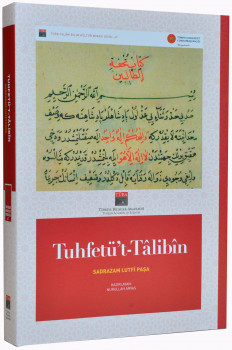
Lutfi Paşa (d. 971/1564), one of the grand viziers of the reign of Kânûnî Sultan Süleyman, gained extensive experience in state administration at various levels of the Ottoman State. His engagement with scholarly learning, which began at the Enderun school, continued after his dismissal from the office of grand vizier when he withdrew to the provinces. Indeed, after settling in Dimetoka, he established a waqf in his own name and also authored scholarly works. His 1544 work entitled Tuhfetü’t-Tâlibîn, an ilmihâl book, is one of these works.
This study consists of three main sections: introduction, text, and index. The introduction first provides brief information on the historical background of ilmihâls, their earliest examples, and the development of the ilmihâl tradition in the Ottoman sphere. It then records basic information about Lutfi Paşa and his works before proceeding to a detailed examination of Tuhfetü’t-Tâlibîn. In this section, such features as the description of the manuscript copies, the sections of the work, its sources, and its linguistic and stylistic characteristics are discussed under separate headings. The text section contains the transcription of the work into the Latin alphabet using the transcription alphabet.
At the beginning of his work, Lutfi Paşa provides general information on how faith should be understood; he then explains acts of worship such as ablution (Abdest), ghusl (Gusül), prayer, zakât, fasting, and pilgrimage according to the Hanafi madhhab. In discussing these matters, the author cites not only the views of the ulema of the Hanafi madhhab but also, at times, the ijtihads of the Shafi‘i and Maliki madhhabs. Tuhfetü’t-Tâlibîn concludes with an account of the nafile prayers transmitted from Hazreti Peygamber and the scholars.