

Tercüme-i Tıbrü'l-Mesbûk
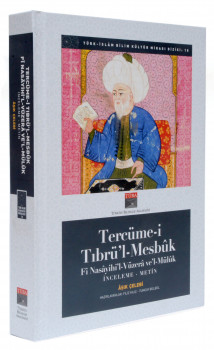
In ancient Eastern civilizations, various texts of the siyasetnâme (political treatise) genre were written to highlight shortcomings in society or governance. These works generally address the qualities a ruler should possess and the appropriate manner of relating to the people, his own administrative staff, and the bureaucracies of other states. Gazâlî, who authored works in many fields such as theology, philosophy, Sufism, and Islamic jurisprudence, wrote the work Nasihatü’l-Mülûk in Persian at the request of the Seljuk ruler Sultan Sanjar; it was later translated into Arabic under the title Tıbrü’l-Mesbûk fî Nasâyihi’l-Mülûk. This work was translated into Turkish by Âşık Çelebi, a prominent figure in 16th-century Ottoman literature, under the title Tercüme-i Tıbrü’l-Mesbûk fî Nasâyihi’l-Vüzerâ ve’l-Mülûk. The book, prepared by Filiz Kılıç and Tuncay Bülbül, contains a critical edition of the aforementioned work along with a detailed introduction discussing its content, language, and stylistic features.