

Risâle der İlm-i Hisâb
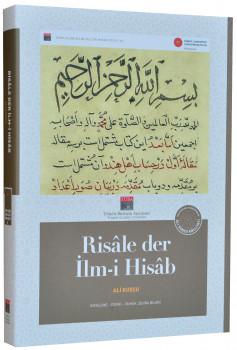
Ali Kuşçu’s Risâle der İlm-i Hisâb, regarded as a central figure in the institutionalization of the rational sciences among the Ottomans, is a fundamental source that has remained largely overlooked to date. Written in Persian in Samarkand, the work did not achieve the same level of recognition as the Arabic er-Risâletü’l-Muhammediyye, which Kuşçu wrote after his arrival in Istanbul, yet it circulated widely within the Islamic mathematical tradition in the 15th century and is notable for its hundreds of surviving copies.
This book contains a critical edition, Turkish translation, and modern mathematical evaluation of Risâle der İlm-i Hisâb, based on the author’s copy registered at the Süleymaniye Library. Structured under subheadings such as Hint hesabı, tencîm, and mesâha, the work sheds light on the pedagogical and theoretical foundations of elementary hesap instruction.
At the same time, this study reveals the differences in level and purpose between Ali Kuşçu’s two works in the hesap literature and invites a reassessment of established assumptions concerning the history of science. Through the modern explanations, symbols, and methodological analyses it provides, the hesap tradition of the 15th century is made accessible to the contemporary academic reader.