

Müze-i Askerî-i Osmanî Züvvârına Mahsûs Rehber
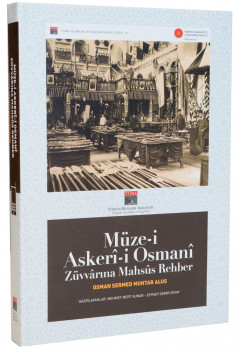
The work titled Müze-i Askerî-i Osmanî Züvvârına Mahsûs Rehber (Guide to the Ottoman Military Museum), which Sermed Muhtar Alus was tasked with preparing during his tenure as an official at the Military Museum and which was completed between 1920 and 1922 and published in three volumes, is a text that goes far beyond the scope of a typical museum guide in terms of content. Transcending the characteristics of a guide that merely introduces the museum’s collection, Alus’s work has evolved into a comprehensive study covering a wide range of topics, from the history of the Church of Hagia Irene, which housed the museum, to the founding of the Ottoman Military Museum, the collections housed within the museum, and Ottoman and European military history and organization. Sermed Muhtar Alus’s book is significant not only from the perspective of military historiography but also in terms of documenting the condition of a portion of the Military Museum’s collection, which was moved frequently and suffered damage for various reasons during the Ottoman and Republican periods, as it stood at the beginning of the 20th century. To this day, Sermed Muhtar Alus’s Ottoman-language guide has served as a direct and indirect reference source for all authors who have written about the Military Museum. The first part of the work provides detailed information on the establishment and building of the Ottoman Military Museum. The second part begins with an account of the Ottoman military organization during the early and classical periods. Following the account of the organization, the text delves into the uniforms of the military classes, the weapons they used, and their classification. Another topic in the second part covers military equipment in general, including the horses, tents, banners, flags, and other war equipment used in the Ottoman army. The third part of the work is the section that most closely resembles a museum guide. This section provides detailed information on the military ranks found in the "Yeniçeri Kıyafethanesi/Müzesi" (Janissary Costume Museum) (also known as the “Elbise-i Atika” collection), their duties, and their uniforms. This section is illustrated by Sermed Muhtar using drawings from Jean Brindesi’s lithographic album Elbise-i Atika. Alus’s work concludes with a description of the uniforms of the military classes during these periods and the changes made to them. In addition to these features, which make the work valuable in its own right, the information and discussions it contains on topics such as Ottoman and European military history and organization, the history of weapons, and the history of the Eastern Roman Empire make Alus’s guide appealing to history enthusiasts as well. Prepared by Assoc. Prof. Dr. Mehmet Mert Sunar and Zeynep Demir Okyay, this work has been published for the first time using the modern Turkish alphabet.