
iNCLUSION in the Cultural Heritage Sector
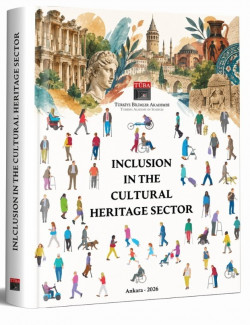
How can cultural heritage be made more accessible, participatory and meaningful for diverse communities? Inclusion in the Cultural Heritage Sector explores how people encounter, interpret and contribute to heritage with different abilities, ages, identities and social circumstances. Interdisciplinary perspectives and international examples are brought together in this volume as inclusion is understood not only as physical access but also as communication, learning, representation and belonging. The chapters cover accessible heritage tourism, inclusive museum practices, cultural heritage education, multisensory interpretation, digital storytelling, immersive technologies and participatory methods. They address people with disabilities, children and young learners, gifted students, migrants and other communities whose perspectives may not be represented in cultural institutions. Contributions also consider sustainable mobility, community initiatives and access to digital cultural resources equitably. Conceptual discussions are linked with research and practical experience in this collection so that cultural institutions, educators, policymakers and heritage professionals can figure out barriers and construct more inclusive opportunities for engagement. The book encourages readers to comprehend heritage as a shared cultural resource constructed through dialogue, participation and various ways of knowing and experiencing the world.