


TÜBA Publishes Guideline for Ottoman History
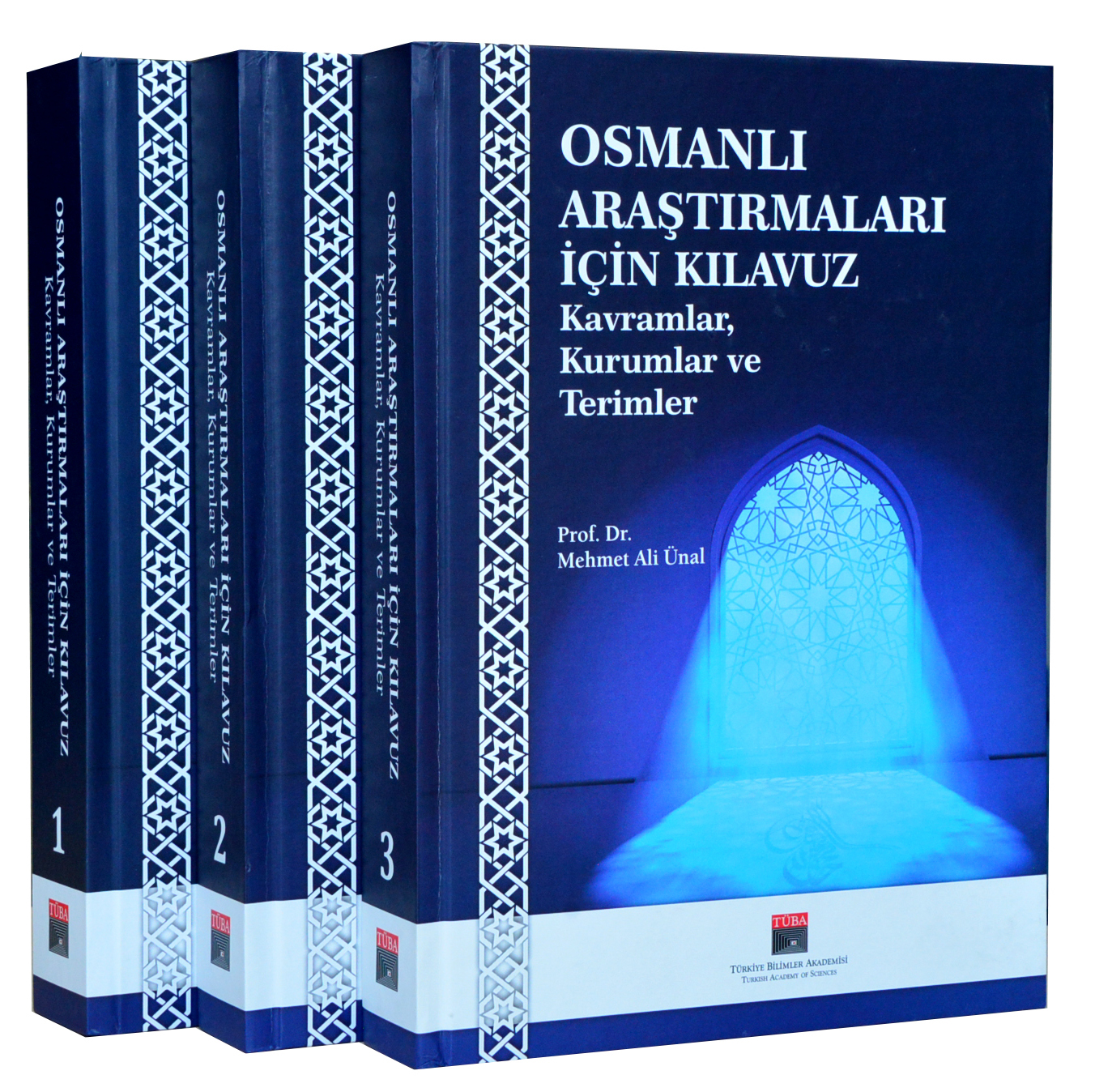 TÜBA has published the three-volume work titled "Guideline for Ottoman Studies: Institutions, Concepts and Terms" prepared by Prof. Mehmet Ali Ünal, which includes approximately 22,000 terms.
This work, titled "Guideline for Ottoman Studies: Institutions, Concepts and Terms" is presented for the benefit of everyone involved in academic work, especially university students. It serves as a reference source for scholars. Originally published in 2011 under the title "Ottoman History Dictionary," the work has been updated and reintroduced to the literature after 13 years of development by Prof. Ünal. The guide covers Ottoman political, military, social, and economic institutions, bureaucratic structures, and the terms and concepts used during the Ottoman period, providing detailed explanations. It also elaborates on measurement units, taxes, and significant military and political events of the era. Many institutions, concepts, and terms not found in existing dictionaries are included. Noting that the work incorporates original information from hundreds of sources, travelogues, chronicles, and studies, Prof. Ünal said, "I meticulously read and examined the ten-volume travelogue of Evliya Çelebi from start to finish. Evliya Çelebi records every institution, customs, concepts, measurement units, and names of ships and boats he encountered, not only within the Empire’s geography but also in Iran, Sudan, and Austria. The information he provides about musical instruments and music modes surprises those working in the field of musicology. Likewise, the works of Peçevî, Naima, Kâtip Çelebi, and the Vâkı’ât-ı Ruzmerre by Üsküdarlı Abdullah Efendi published by TÜBA are quite rich in Ottoman terminology. Ahmed Cevdet Paşa’s Tarih-i Cevdet is an important work for the history of Ottoman institutions in the 18th century. There are hundreds of such works. For example, the phrase ‘Kâfir Şapkası Başına Olmak’ only appears in Naimâ’s history. It is a form of oath. During a discussion about the Grand Vizier Fazıl Ahmed Paşa's campaign to Crete, he swears ‘I will certainly go; if I don’t, let a kafir’s hat be on my head.’ It is similar to an oath meaning ‘let me be a nonbeliever if I don’t do it.’ The phrase ‘Sözüne Mum Yapıştırmak’ also appears only in Naimâ. It means that no one’s word is cut off or silenced.”
Prof. Ünal expressed his honor at the publication of his work following TÜBA's detailed evaluation and acceptance. He said, "TÜBA, as one of the most serious and prominent institutions in Türkiye supporting science and scientific work, has published many valuable source works and some studies. The recognition it has received worldwide in scientific book publishing and its contribution to the publication of this work is highly valuable. Therefore, having my 40-year effort published by an institution like TÜBA is very important for reaching the target audience. I am proud of the publication of my work by TÜBA after a long review process; it is a matter of honor for me.”