


A Comprehensive Guide to Cultural Heritage
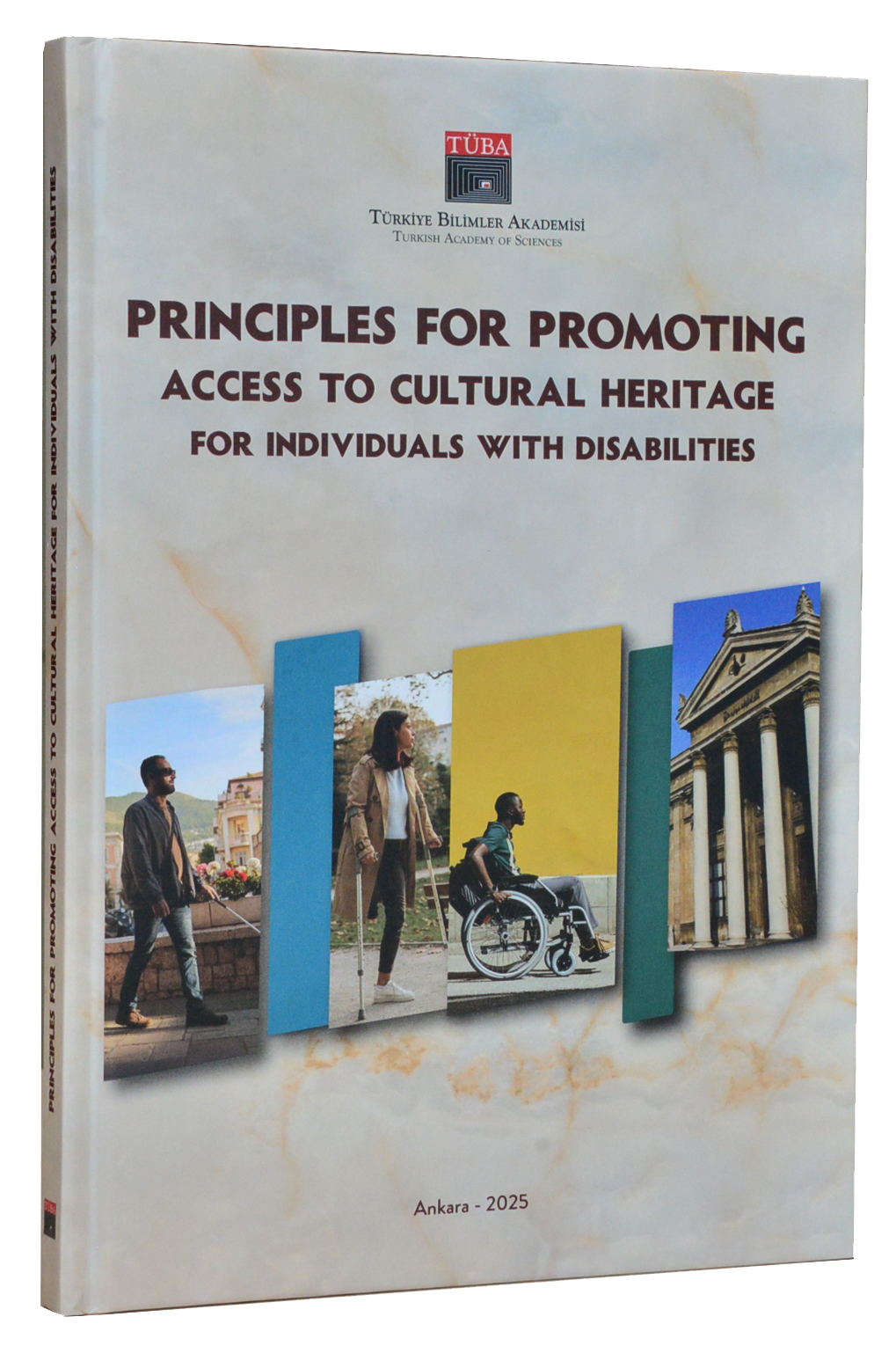 TÜBA has published a work titled “Principles for Promoting Access to Cultural Heritage for Individuals with Disabilities – Easy-to-Read Book,” which stands out for its content focused on inclusivity in access to cultural heritage.
Prepared under the TÜBA-coordinated Erasmus+ iNCLUSION project, supported by the Turkish National Agency, the publication serves as a scientific and practical guide aimed at facilitating access to cultural heritage for individuals with disabilities—a product of both national and international collaboration. Aiming to enhance inclusivity in cultural heritage fields, the study seeks to contribute to Türkiye’s institutional capacity in this area by combining scientific knowledge with practical application.
Inclusive Access is Addressed as a Right
TÜBA President Prof. Dr. Muzaffer Şeker emphasizes in the book’s foreword that cultural heritage is not merely a reflection of the past but also the identity and shared memory of societies. Prof. Dr. Şeker stated that equal access to this heritage goes beyond being a technical issue; it is directly a matter of human rights and social participation. In this context, he highlighted that accessibility must be approached as a multi-layered process encompassing physical, sensory, cognitive, and communication dimensions.
Şeker noted that the work was prepared based on scientific research, international standards, and principles of inclusive design, and expressed that the book will serve as both an academic resource and a strategic guide for policymakers, educators, and cultural institution managers.
A Focus on Holistic Access from the Book’s Editors
In the foreword, the book’s editor’s note that while millions of people worldwide wish to visit cultural heritage sites, individuals with special needs are often deprived of this experience due to the lack of sufficient accessibility in existing structures. They state that the book’s primary aim is to make access to cultural heritage more inclusive. The editor’s note that the book offers a holistic approach to accessibility covering pre-visit, during-visit, and post-visit phases; they also highlight that it includes recommendations spanning a broad spectrum, from communication to physical arrangements, and from sensory needs to individual support mechanisms.
The book is aimed at a broad audience, including managers and experts working in cultural heritage fields, civil society organizations, university students, and professionals working with individuals with special needs.
The book addresses various disability groups in detail, including hearing loss, visual impairment, intellectual disabilities, learning disabilities, autism spectrum disorder, and physical disabilities. While explaining the characteristics of individuals within each group, it offers concrete recommendations for enhancing accessibility in cultural heritage sites. The book also emphasizes that accessibility is not limited to spatial arrangements alone; it requires a transformation encompassing all aspects of the visitor experience, including communication language, digital content, and guidance services. Prepared in an “easy-to-read” format, the work aims to reach a broader user base by presenting information in a simple and understandable language.